
MySQL
Chapter 3 - Database Tables, Columns and Rows
Assignment - List Tables and Columns - Company Management System
Objective:
You are required to create a list of tables and columns for a Company Management System that manages company information, employees, departments, and branches. Your task is to identify relevant tables and specify key columns for each.
Requirements:
You will need to define the necessary tables and columns to support the following functionalities required for the Company Management System.
1. Employee Management
- Tracking employee details (name, contact info, department, job role)
- Employee attendance and leave management
- Performance tracking and appraisals
2.Project Management
- Project creation, assignment, and tracking
- Task and milestone management
- Resource allocation and tracking
- Time tracking for employees on specific projects
- Project budgeting and cost tracking
3.Department Management
- Organizing departments (e.g., HR, IT, Sales, Finance)
- Assigning employees to departments
- Departmental resource management and reporting
4.Client and Vendor Management
- Storing and managing client and vendor information
- Managing contracts, invoices, and agreements
- Vendor assessment and performance tracking
5.Finance and Accounting
- Budget planning and forecasting
- Invoice and billing management
- Accounts payable/receivable
- Financial reporting and analysis
6.Inventory and Asset Management
- Inventory tracking and management
- Purchase orders and requisitions
- Supplier management and procurement
7. Reporting and Analytics
- Real-time dashboards for performance tracking
- Customizable reports (e.g., employee performance, financials, project progress)
- Data visualization and analytics tools
8. Time and Attendance Management
- Tracking work hours, overtime, and breaks
- Employee time-off requests and approvals
9. Security and Access Control
- Role-based access control for sensitive data and functionalities
- Employee login and authentication (e.g., single sign-on, two-factor authentication)
- Monitoring and auditing access to systems and data
Sample Tables:
Note: These are just a few example tables; you will need to design additional tables based on the functionalities outlined above for the Company Management System.
- Company
- Employees
- Departments
- Branches
Sample Columns:
- Table Name: Employees
- Sample Columns:
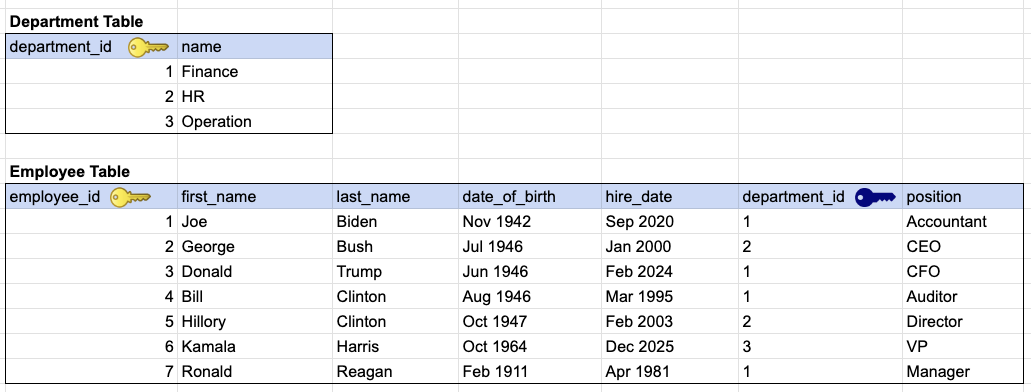
EmployeeID: Unique identifier for each employee (Primary Key)FirstName: Employee's first nameLastName: Employee's last nameDepartmentID: Foreign key referencing the Department table
Additional Guidelines:
- Ensure every table has a primary key.
- Define foreign keys where needed to establish relationships between tables.
- Include important columns relevant to the business scenario (e.g., for employees, include columns like
HireDateandSalary). - We recommend that you define the necessary tables and columns, along with sample data, using the free online version of Google Sheets from google drive, as shown in the image below.
- Finally, students enrolled in our online Zoom class will receive guidance throughout this assignment, and their progress will be manually reviewed incrementally until they reach a certain level of completion.
- As a beginner, it is recommended that you complete the table and column listings for 50-75% of the functionalities mentioned above. Completing listings for 100% of the functionalities is a real BONUS.
- GOOD LUCK WITH YOUR ASSIGNMENT!!! Don't forget to contact us if you need any further assistance with your assignments, and most importantly, for a manual review and approval of your work.
SAMPLE TABLE DESIGN
To gain complete access, login with gmail or outlook, no need of signup, click here

Comments Not Found