
MySQL
Primary Key
A primary key is a fundamental concept in a Relational Database Management System (RDBMS) used to uniquely identify each record in a table. It ensures that each record is distinct and can be accessed or referenced without ambiguity. The primary key must be unique for each record and cannot contain NULL values. It is critical for maintaining data integrity and establishing relationships between tables.
Here’s a breakdown of the primary key concept:
Definition and Purpose
- A primary key is a column or a set of columns that uniquely identifies each row in a table.
- It ensures that no two rows have the same value in the primary key column(s).
CREATE TABLE Employees (
    EmployeeID INT PRIMARY KEY,
    FirstName VARCHAR(50),
    LastName VARCHAR(50),
    DepartmentID INT
);
Uniqueness
- Each value in the primary key column must be unique.
- This uniqueness constraint prevents duplicate records in the table.
-- Example: This will fail if EmployeeID 1 already exists
INSERT INTO Employees (EmployeeID, FirstName, LastName, DepartmentID)
VALUES (1, 'Alice', 'Johnson', 101);
Not NULL
- The primary key column cannot have
NULLvalues, ensuring that every record has a valid identifier.
-- The following statement will fail because EmployeeID cannot be NULL INSERT INTO Employees (EmployeeID, FirstName, LastName, DepartmentID) VALUES (NULL, 'Bob', 'Smith', 102);- The primary key column cannot have
Composite Primary Key
- A primary key can be made up of more than one column. This is known as a composite primary key.
- Useful when a single column is not sufficient to uniquely identify a record.
CREATE TABLE EmployeeProjects (
    EmployeeID INT,
    ProjectID INT,
    PRIMARY KEY (EmployeeID, ProjectID)
);
Foreign Key Reference
- Primary keys are often used as foreign keys in other tables to establish relationships.
- For example, the
DepartmentIDin theEmployeestable can reference theDepartmentIDin theDepartmentstable.
CREATE TABLE Departments (
    DepartmentID INT PRIMARY KEY,
    DepartmentName VARCHAR(50)
);

CREATE TABLE Employees (
    EmployeeID INT PRIMARY KEY,
    FirstName VARCHAR(50),
    LastName VARCHAR(50),
    DepartmentID INT,
    FOREIGN KEY (DepartmentID) REFERENCES Departments(DepartmentID)
);
Indexing
- Primary keys automatically create an index on the key column(s), which speeds up data retrieval operations.
- This index helps improve the performance of queries involving the primary key.
-- Example: Index is created automatically on EmployeeID
SELECT * FROM Employees WHERE EmployeeID = 1;
Understanding primary keys is essential for designing efficient and reliable database schemas. They play a crucial role in data integrity, relationship management, and query performance.
To gain complete access, login with gmail or outlook, no need of signup, click here

Detailed Breakdown of Primary Key Characteristics and Purposes
Uniqueness
Guaranteed Uniqueness:Each row in a table is uniquely identified by the primary key, meaning no two rows can have the same primary key value. This uniqueness guarantee is crucial for accurately identifying and interacting with individual records.
Non-nullability
Cannot be Null:A primary key column cannot have a NULL value. Every row must have a primary key value to ensure that it can be uniquely identified. This rule helps maintain data integrity by preventing records from becoming "invisible" or unidentifiable due to a lack of an identifier.
Immutability
Stability and Permanence:Once assigned, the primary key value of a record should not change. While this is more of a best practice than a strict rule enforced by all database systems, it's important for maintaining data integrity and consistency over time. Changing primary key values can lead to issues with data relationships and integrity.
Indexing
Automatic Indexing:Most database systems automatically create an index for the primary key, making search and retrieval operations much faster. An index, in this context, is a data structure that improves the speed of data retrieval operations on a database table at the cost of additional writes and storage space to maintain the index data structure.
Simplification of Relationships
Facilitating Relationships:In relational databases, primary keys play a crucial role in establishing relationships between tables. A primary key from one table can be referenced in another table to create a "foreign key" relationship, enabling the relational database to link data across tables efficiently. This relationship is foundational for operations like joins, which combine data from multiple tables based on these keys.
Composite Primary Keys
Single or Multiple Columns:While a primary key can be a single column, it can also consist of multiple columns. This is known as a composite primary key. It is used when no single column uniquely identifies each row, but a combination of columns does. Each part of this composite key must be part of the primary key in every row.
Use Cases and Examples
For example, in a "Users" table, the primary key might be a "UserID" column, where each user is assigned a unique identifier. In an "Orders" table, the primary key could be an "OrderID." If an order can be uniquely identified by combining "OrderDate" and "OrderNumber", these two columns together could serve as a composite primary key.
Conclusion
Primary keys are a cornerstone of database design, ensuring data integrity, improving performance, and enabling the relational model's powerful data linkage capabilities. Properly defining primary keys is essential for effective database and application design, ensuring that data remains consistent, accessible, and meaningful.
Understanding Primary Keys through a Library Analogy
Imagine you're in a library full of books. Each book has a unique identification number, often called an ISBN (International Standard Book Number). This number is specific to that book and no other book in the library (or the world) has the same ISBN. When you want to find a specific book, you can just use this number to locate it quickly among thousands of others.
In database terms, this ISBN acts like a primary key for the book in the library's catalog system. Just as the ISBN uniquely identifies each book, a primary key in a database table uniquely identifies each record. This means that every record, or row of data, in a table can be quickly and precisely accessed by its primary key, avoiding any mix-up or duplication among the vast amount of data stored in the database.
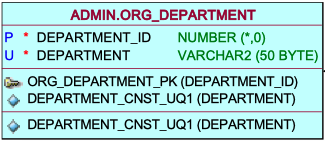
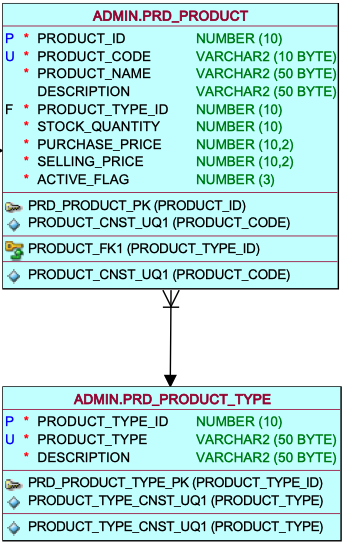
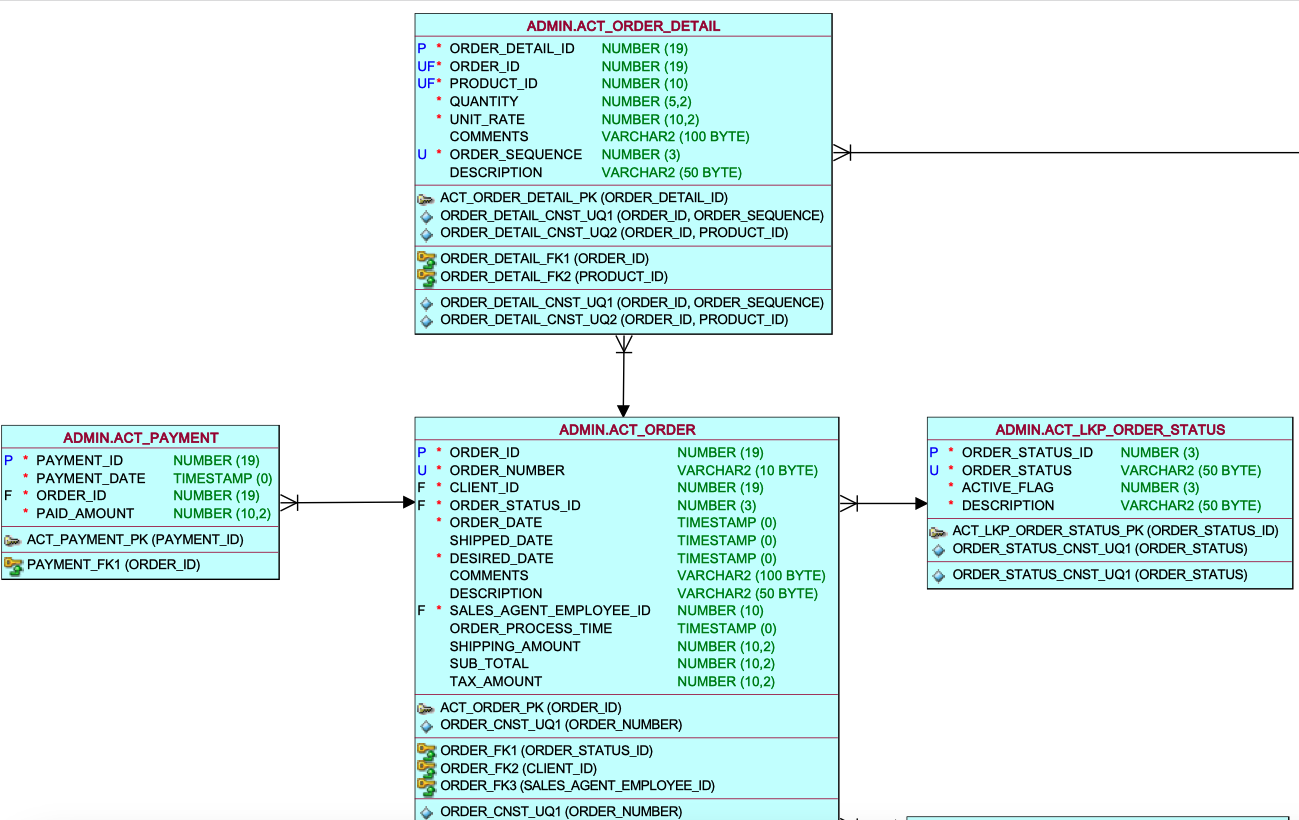
TABLES WITH FIRST COLUMNS AS PRIMARY KEY


Comments Not Found