
PostgreSQL
Sub Queries
Subqueries in PostgreSQL are a powerful feature of Data Query Language (DQL) that allow you to embed one query within another. This can be particularly useful when you need to perform complex queries that involve multiple steps or calculations. Subqueries can be used in various parts of a SQL statement, such as the SELECT, FROM, or WHERE clauses, to filter or aggregate data in sophisticated ways.
Here’s a breakdown of how subqueries work in PostgreSQL:
- Subquery Basics
- A subquery is a query nested inside another query.
- Subqueries can be used to return data for the outer query to process.
- They are often enclosed in parentheses.
- Types of Subqueries
- Scalar Subqueries: Return a single value and are used where a single value is expected.
- Example:
SELECT first_name
FROM customers
WHERE customer_id = (SELECT customer_id FROM accounts WHERE account_balance > 1000);
- Example:
- Row Subqueries: Return a single row of values and are used when the outer query expects a single row.
- Example:
SELECT customer_id, first_name
FROM customers
WHERE (customer_id, first_name) = (SELECT customer_id, first_name FROM accounts WHERE account_balance > 1000 LIMIT 1);
- Example:
- Table Subqueries: Return a set of rows and columns and are used in the FROM clause.
- Example:
SELECT * FROM (SELECT * FROM transactions WHERE transaction_amount > 500) AS high_value_transactions;
- Example:
- Scalar Subqueries: Return a single value and are used where a single value is expected.
- Subquery in the
WHEREClause- Used to filter results based on the results of another query.
- Example:
SELECT account_id, account_balance
FROM accounts
WHERE account_id IN (SELECT account_id FROM transactions WHERE transaction_date = '2024-09-01');
- Subquery in the
FROMClause- Used to create a temporary table to be used by the outer query.
- Example:
SELECT customer_id, total_transactions
FROM (
  SELECT customer_id, COUNT(*) AS total_transactions
  FROM transactions
  GROUP BY customer_id
) AS transaction_summary
WHERE total_transactions > 10;
- Correlated Subqueries
- These subqueries reference columns from the outer query and are executed once for each row processed by the outer query.
- Example:
SELECT customer_id, first_name
FROM customers c
WHERE EXISTS (
  SELECT 1
  FROM accounts a
  WHERE a.customer_id = c.customer_id AND a.account_balance > 1000
);
By using subqueries effectively, you can perform more complex queries and achieve more sophisticated data analysis in PostgreSQL.
To gain complete access, login with gmail or outlook, no need of signup. click here

TEST CODE
To display the names of employees earning more than the company's average salary in PostgreSQL, you can use the following query:
SELECT employee_number, first_name, last_name, designation, salary
FROM org_employee
WHERE salary > (SELECT AVG(salary) FROM org_employee);SQL SUB QUERY EXAMPLE
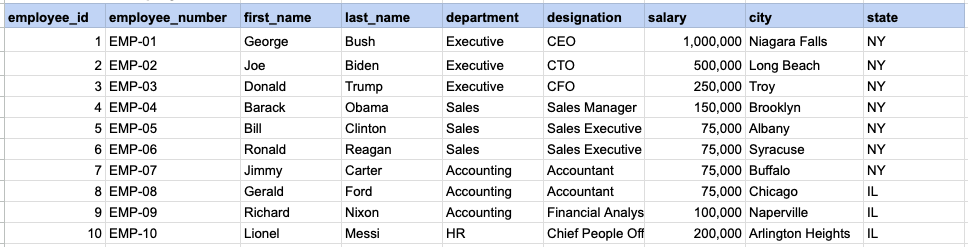
Raw data from employee table
Query
SELECT employee_number, first_name, last_name, designation, salary
FROM org_employee
WHERE salary >= (SELECT AVG(salary) FROM org_employee);
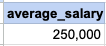
Step1, Execute sub query
First, run the subquery '(SELECT AVG(salary) FROM org_employee)' to obtain its result, which in this instance is the average salary.
Sub query output
Step 2, apply sub query output as filter criteria on main query
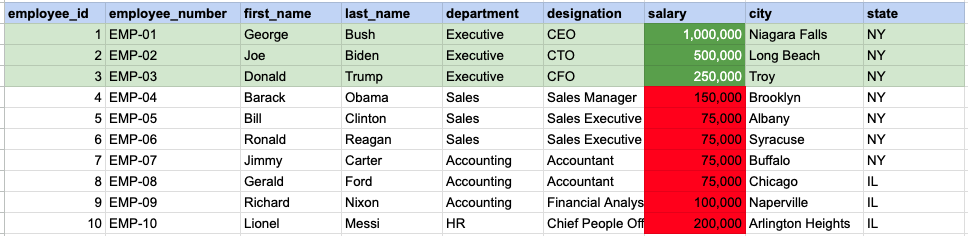
In this step, we filter for employees whose salary is greater than or equal to 250,000, which is the average salary determined from the subquery output.
FINAL, main query output

Comments Not Found