
PostgreSQL
SQL Execution Order
SQL Execution Order in PostgreSQL
When executing a SQL query, understanding the order of operations is crucial for constructing accurate and efficient queries. In PostgreSQL, the execution of SQL statements follows a specific sequence, which can affect the results and performance of your queries. By knowing this order, you can better predict how your SQL statements will be processed and ensure that your queries are optimized.
Here's a breakdown of the SQL execution order:
- FROM Clause
- The query starts by retrieving data from the tables or views specified in the
FROMclause. - Example:
SELECT * FROM customers; - The query starts by retrieving data from the tables or views specified in the
- JOINs
- If there are any
JOINoperations, they are processed next. This includes inner joins, left joins, right joins, and full joins. - Example:
SELECT customers.name, accounts.balance FROM customers JOIN accounts ON customers.id = accounts.customer_id; - If there are any
- WHERE Clause
- The
WHEREclause is used to filter the rows returned by theFROMandJOINoperations based on specified conditions. - Example:
SELECT customers.name FROM customers WHERE customers.status = 'active'; - The
- GROUP BY Clause
- The
GROUP BYclause groups the rows that have the same values into summary rows, like grouping customers by account type. - Example:
SELECT account_type, COUNT(*) FROM accounts GROUP BY account_type; - The
- HAVING Clause
- The
HAVINGclause filters groups created by theGROUP BYclause based on specified conditions. - Example:
SELECT account_type, COUNT(*) FROM accounts GROUP BY account_type HAVING COUNT(*) > 5; - The
- SELECT Clause
- The
SELECTclause specifies which columns or calculations to return in the result set. - Example:
SELECT name, balance FROM accounts; - The
- ORDER BY Clause
- The
ORDER BYclause sorts the result set based on one or more columns. - Example:
SELECT name, balance FROM accounts ORDER BY balance DESC; - The
- LIMIT/OFFSET Clause
- The
LIMITclause restricts the number of rows returned, whileOFFSETskips a number of rows before starting to return rows. - Example:
SELECT name, balance FROM accounts ORDER BY balance DESC LIMIT 10 OFFSET 5; - The
Understanding this order helps you in writing more efficient queries and in debugging complex SQL statements.
To gain complete access, login with gmail or outlook, no need of signup. click here
SQL Query Order of Execution
Below is an illustration depicting the internal processing sequence of different clauses in a SQL statement by the SQL engine. It's important to note that in this example, the DISTINCT and LIMIT clauses are not utilized.
SQL Execution Order
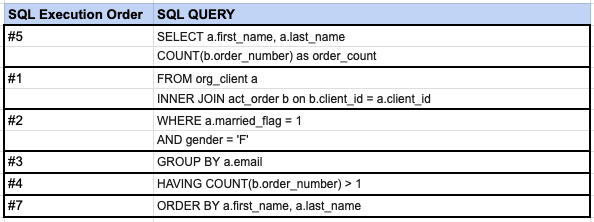
As illustrated in this image, the SQL engine initially executes the FROM clause and any INNER JOINs, followed by the other steps as depicted.
Comments Not Found