
PostgreSQL
PIVOT
In PostgreSQL, the PIVOT is used to transform rows into columns, which is particularly useful for generating summary reports. Although PostgreSQL does not have a built-inPIVOTfunction like some other SQL databases, you can achieve similar results using the crosstab function provided by the tablefunc extension. This operation is often used in reporting to aggregate data and present it in a more readable format.
Steps to Implement a Pivot Table in PostgreSQL
- Install the
tablefuncExtension- Before you can use the
crosstabfunction, you need to install thetablefuncextension in your PostgreSQL database.
CREATE EXTENSION tablefunc; - Before you can use the
- Create a Sample Table
- Assume you have a
transactionstable with columns fortransaction_date,account_id, andamount.
CREATE TABLE transactions ( transaction_date DATE, account_id INT, amount DECIMAL ); - Assume you have a
- Insert Sample Data
- Populate the
transactionstable with some sample data.
INSERT INTO transactions (transaction_date, account_id, amount) VALUES ('2024-01-01', 101, 150.00), ('2024-01-01', 102, 200.00), ('2024-02-01', 101, 180.00), ('2024-02-01', 102, 220.00); - Populate the
- Create a Pivot Query
- Use the
crosstabfunction to create a pivot table that shows total transaction amounts by account and month.
SELECT * FROM crosstab( 'SELECT account_id, to_char(transaction_date, ''YYYY-MM'') AS month, SUM(amount) AS total_amount FROM transactions GROUP BY account_id, month ORDER BY account_id, month' ) AS ct ( account_id INT, "2024-01" DECIMAL, "2024-02" DECIMAL ); - Use the
- Understand the Pivot Output
- The output of the above query will be a table where
account_idis in the rows, and each month has its own column showing the total amount for that month.
- The output of the above query will be a table where
- Handling Dynamic Columns
- If you need dynamic columns (e.g., months for different years), you would need to generate SQL dynamically using programming logic or additional SQL queries.
Key Points
- Extension Requirement:
crosstabrequires thetablefuncextension. - Static Columns: The
crosstabfunction needs predefined column names. - Dynamic Columns: Handling dynamic columns requires additional logic.
This approach provides a flexible way to pivot data in PostgreSQL and generate reports that are easy to interpret.
To gain complete access, login with gmail or outlook, no need of signup. click here

SQL PIVOT TECHNIQUE
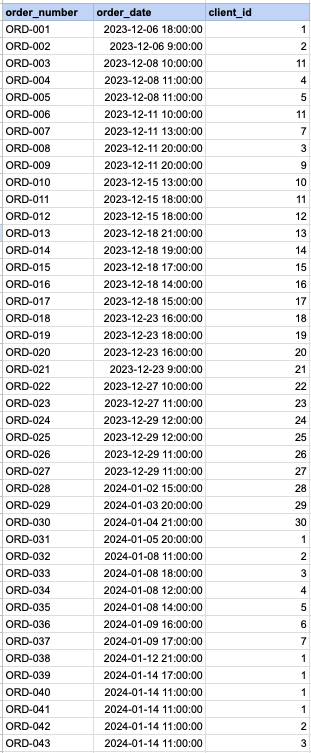
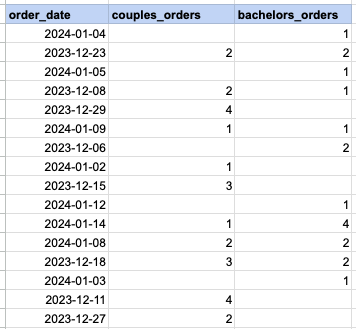
Let's delve into the specifics of implementing the pivot technique across different SQL databases like MySQL, PostgreSQL, Oracle, and Microsoft SQL Server. In our example, we aim to utilize the SQL pivot method to organize daily order counts, distinguishing between orders placed by couples and those by bachelors.
Raw data from order table
Step1, Get client's marital status
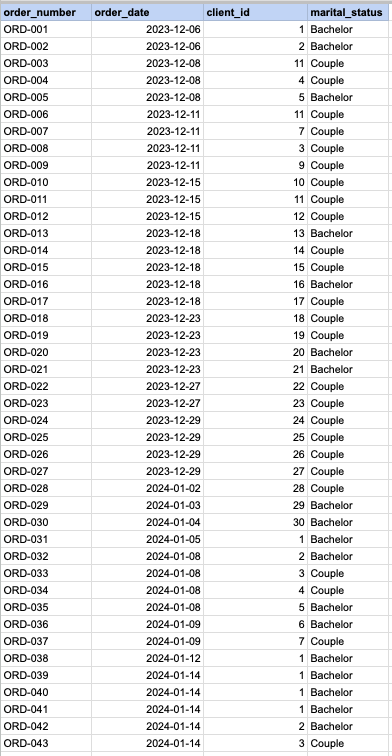
Utilize below query to merge the 'Orders' table with the 'Clients' table, thereby obtaining the marital status of clients from the 'Clients' table. Additionally, transform the 'OrderDateTime' into just the 'OrderDate'.
SELECT
    a.order_number, DATE(a.order_date), a.client_id,
    CASE WHEN b.married_flag = 1 THEN 'Married'
ELSE 'Single' END AS marital_status
FROM act_order a
INNER JOIN org_client b on b.client_id = a.client_id
order by order_id;
Step 1 output
MySQL and PostGreSQL PIVOT technique
SELECT
    DATE(a.order_date) as order_date,
    SUM(CASE WHEN b.married_flag = 1 THEN 1 END) AS couples_orders,
    SUM(CASE WHEN b.married_flag = 0 THEN 1 END) AS bachelors_orders
FROM act_order a
INNER JOIN org_client b on b.client_id = a.client_id
GROUP BY DATE(a.order_date);
MS SQL SERVER PIVOT technique
SELECT * FROM
(SELECT  CONVERT(DATE, a.order_date) as order_date , a.client_id
    CASE WHEN b.married_flag = 1 THEN 'Married'
ELSE 'Single' END AS marital_status
FROM act_order a
INNER JOIN org_client b on b.client_id = a.client_id
) t
PIVOT(
 COUNT(client_id)
FOR marital_status IN (
[Married],
[Single])
) AS pivot_table;
Oracle PIVOT technique
SELECT * FROM
(SELECT  TO_CHAR(a.order_date,'DD/MM/YY') as order_date , a.client_id
    CASE WHEN b.married_flag = 1 THEN 'Married'
ELSE 'Single' END AS marital_status
FROM act_order a
INNER JOIN org_client b on b.client_id = a.client_id
) t
PIVOT(
COUNT(client_id)
FOR marital_status IN ('Married','Single')
)
FINAL OUTPUT
Comments Not Found